Genome Organization & Transcription
How does genome architecture create the unique transcriptional landscapes of differentiated cells?
Establishment and Maintenance of Olfactory Gene Reguation
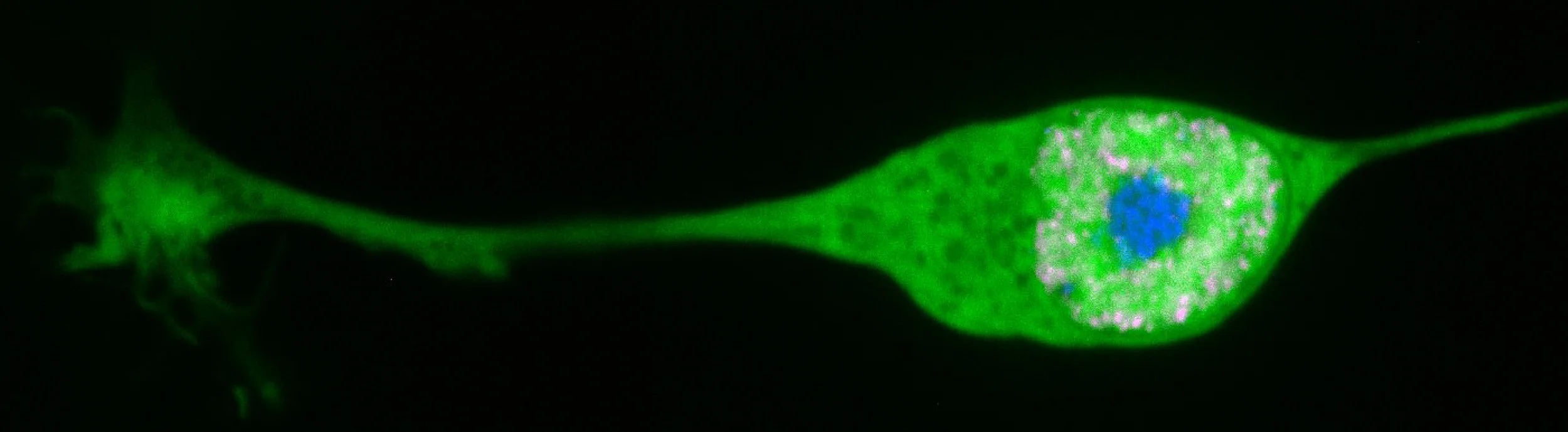
We study mammalian olfactory sensory neurons (OSNs) and the unique "one receptor per neuron" rule governing olfactory receptor (OR) gene choice. As these neurons mature, distant enhancers, including those located on other chromosomes, find and associate with the active OR gene, forming a transcription-factor-mediated hub. Simultaneously, the entire genome undergoes a dramatic rearrangement. This model system will enable the characterization of essential factors in genome rearrangement and the discovery of biological principles governing how distant genomic elements find each other and orchestrate cell-specific transcriptional regulation.
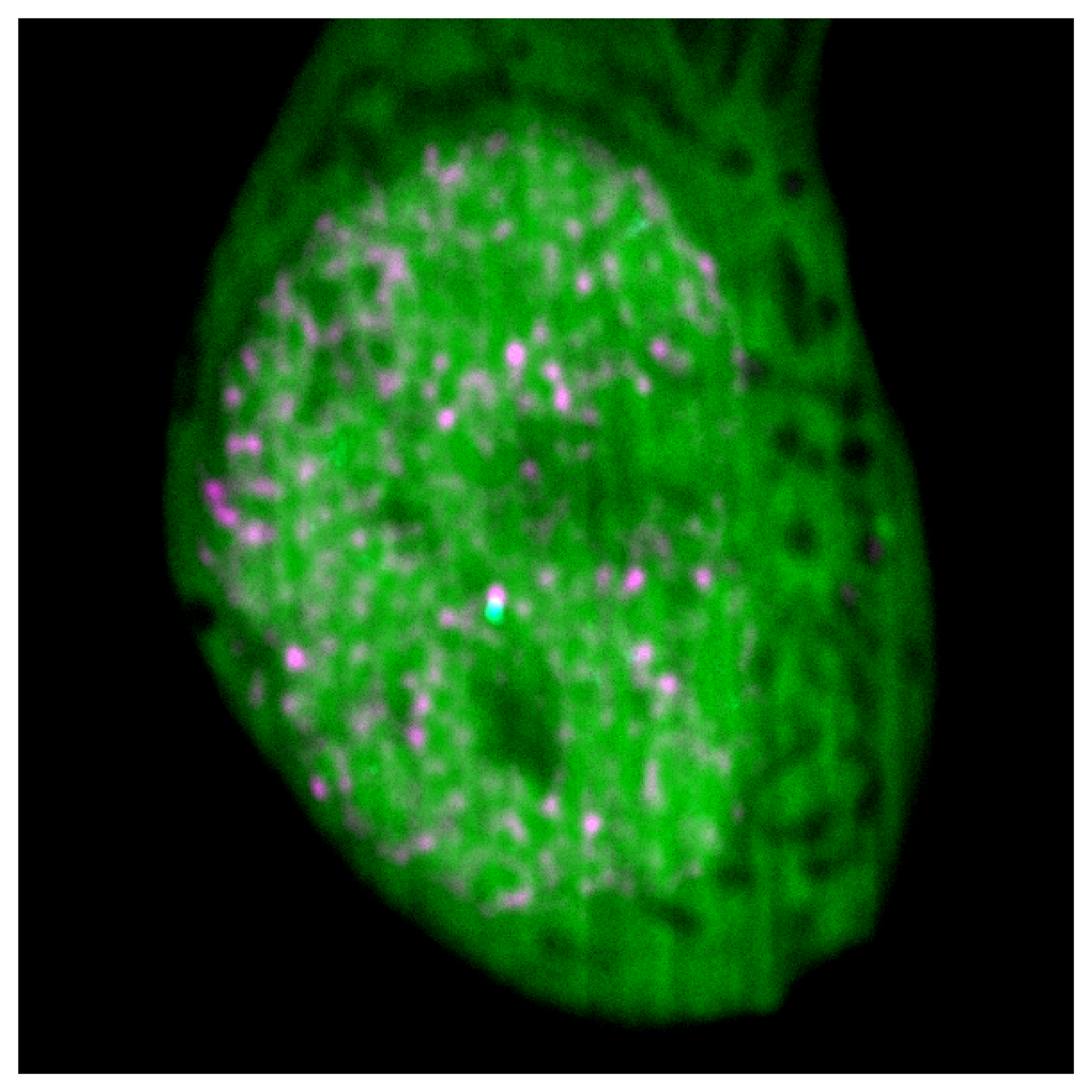
IMAGE: A live, primary OSN, expressing olfr17. The olfr17 DNA is marked in cyan and endogenously expressed Lhx2, a transcription factor, is marked in magenta.
Solid Condensates and Gene Regulation
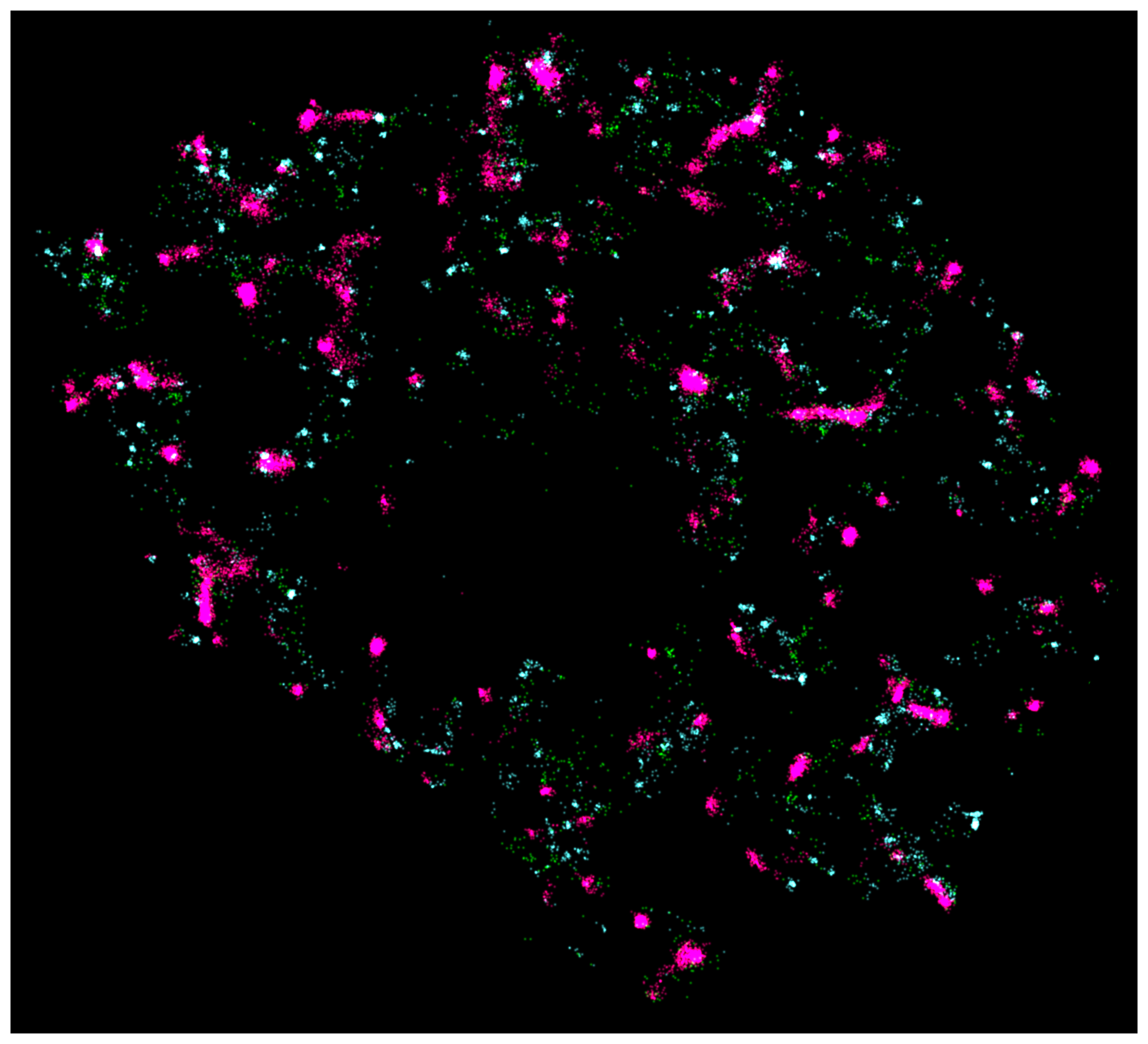
We have discovered that certain transcription factors form long-lived condensates with solid-phase properties in living neurons. These solid-phase condensates form with specific enhancer sequences.
Our current hypothesis is that these solid-state condensates enable ultra-long-range genomic contacts, creating stable transcriptional memories in post-mitotic neurons.
IMAGE: dSTORM image of OSN with magenta and cyan labeling solid condensates.
Beyond OSNs: Nuclear Organization in Neurons
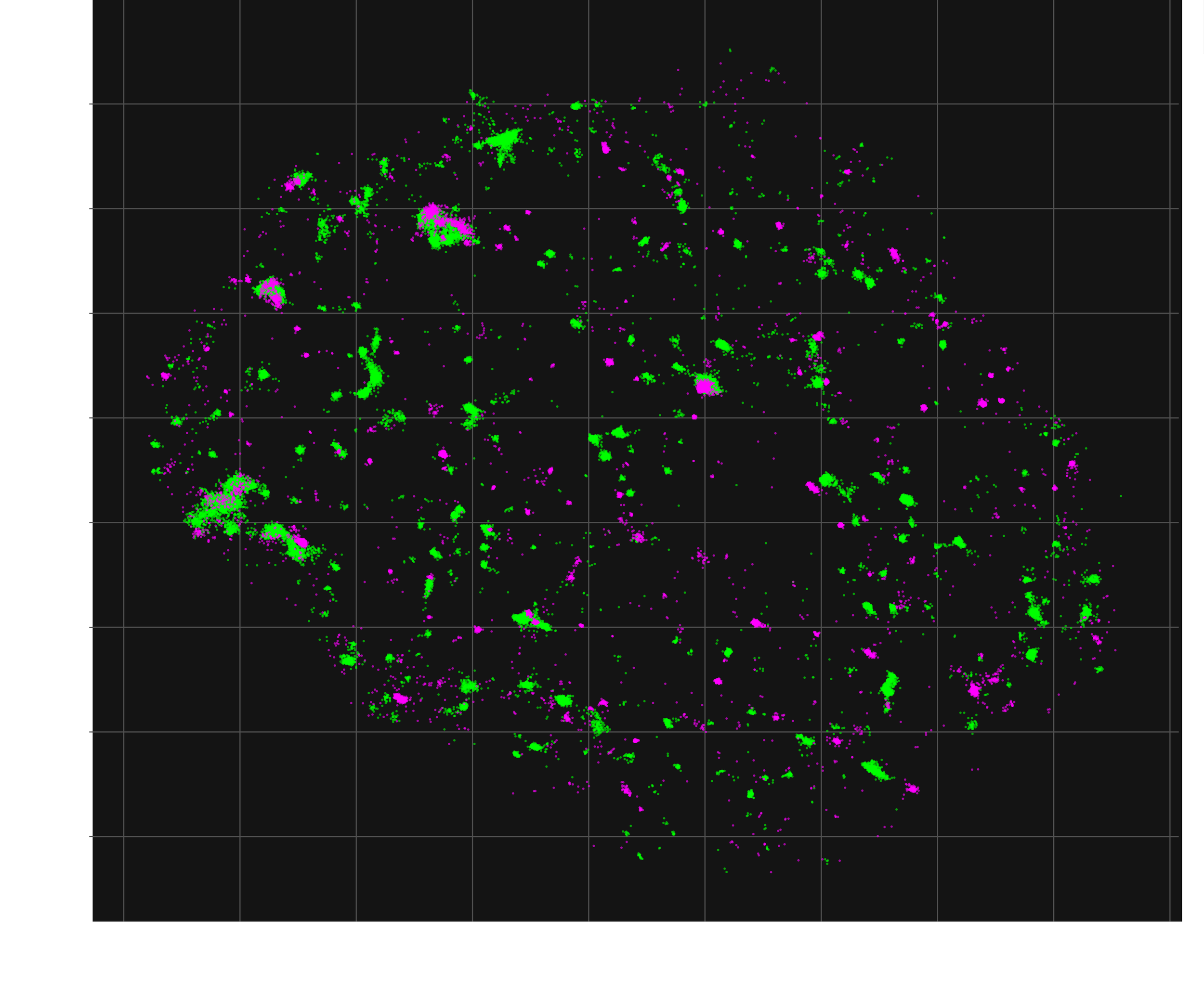
Our preliminary studies suggest that transcription factor condensates with solid properties are a common property of post-mitotic neurons.
We are exploring the role of these condensates in creating long-lived transcriptional profiles. We believe that the current textbook view of nuclear architecture and transcriptional regulation, which emerged predominantly from studies in dividing cells, is not sufficient for the challenges faced by a post-mitotic nucleus that lives for decades without ever dividing or replacing its histone proteins.
IMAGE: dSTORM image of cortical neuron with long-lived solid-condensates composed of transcription factors.